Complex PTSD vs PTSD: Why the Difference Changes Treatment
A board-certified anesthesiologist explains who qualifies for ketamine infusion therapy, what we screen for, and who we turn away. Milford & Westport, CT.

Experiencing trauma changes how your brain processes safety and waiting two months to find out if a daily pill works is a luxury many PTSD sufferers simply don’t have.
When you are living in a constant state of hypervigilance, severe insomnia, or intrusive panic, every single day spent waiting for a medication to take effect feels like an uphill battle. If traditional treatments have left you feeling stuck, flat, or exhausted, it isn’t a failure of effort on your part, and it isn’t a character flaw. It often just means the standard pharmaceutical approach didn’t fit your underlying neurobiology.
Understanding how trauma alters the brain and why traditional SSRIs can take so long to offer relief is the first step toward finding an interventional treatment that actually works with your nervous system, not against it.
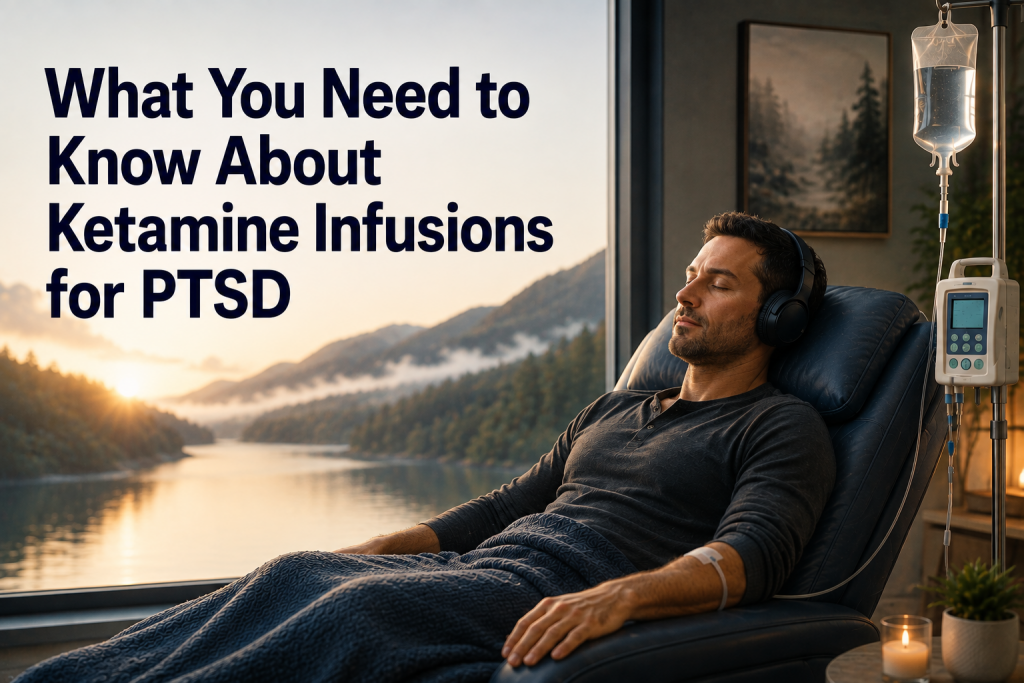
Clinically speaking, Post-Traumatic Stress Disorder (PTSD) is a trauma- and stressor-related disorder triggered by exposure to actual or threatened harm, severe injury, or trauma. Neurologically, it involves a breakdown in how the brain regulates fear: the amygdala (the fear center) becomes hyper-reactive, while the prefrontal cortex and hippocampus lose their ability to calm the system down and process context. This leads to four primary symptom groups lasting longer than a month: intrusive memories, persistent avoidance, negative shifts in mood or thought, and heightened arousal (such as hypervigilance and severe insomnia).
In plain terms: PTSD is what happens when your brain’s internal security system gets stuck in the “ON” position long after the danger has passed.
Normally, once a threat ends, your nervous system resets and lets you know you are safe. With PTSD, that reset button breaks. Your brain’s alarm keeps firing off non-stop, convincing your body that the threat is happening right now even in ordinary, safe situations. You might find yourself constantly scanning rooms for exits, flinching at minor sounds, or getting pulled into overwhelming memories you can’t control.
It isn’t a sign of weakness, and it isn’t something you can simply “will” yourself out of it is a physical, biological reaction to an event that pushed your nervous system past its limits.
The Treatment Pathway for PTSD: From Standard Care to Advanced Options
When treating PTSD, medical guidelines follow a stepped-care approach. For many patients, standard options provide a strong foundation for recovery. But when those initial steps aren’t enough, advanced interventional options like IV ketamine enter the picture.
Clinical guidelines place specialized trauma therapy at the forefront of PTSD treatment. Modalities like Cognitive Processing Therapy (CPT), Prolonged Exposure (PE), and Eye Movement Desensitization and Reprocessing (EMDR) help retrain how the brain processes trauma memories, strengthening the logic center (prefrontal cortex) so it can better regulate the fear center (amygdala).
Alongside or following therapy, physicians often prescribe daily medications. FDA-approved options primarily SSRIs like sertraline and paroxetine work by adjusting neurotransmitters like serotonin over several weeks. They aim to reduce baseline anxiety, lessen hyperarousal, and stabilize mood.
For roughly 40% to 50% of patients, standard therapy and daily medications don’t bring full relief a situation known as treatment-resistant PTSD.
When conventional treatments hit a wall, sub-anesthetic IV ketamine offers a completely different biological mechanism. Instead of slowly nudging serotonin, ketamine acts directly on glutamate the brain’s primary driver of adaptability. By triggering rapid neuroplasticity and temporarily quieting overactive fear loops, IV ketamine can help reset stuck neural circuits when traditional options have fallen short.
Treatment Step | Medical Focus | Primary Goal |
1. Trauma Therapy | CPT, PE, EMDR | Re-process memories & reduce emotional charge |
2. Daily Oral Medications | SSRIs / SNRIs | Balance neurotransmitters for baseline mood control |
3. IV Ketamine Therapy | Glutamate / NMDA Blockade | Promote rapid neuroplasticity & interrupt stuck trauma loops |
While traditional medications like SSRIs have helped millions of people regain stability, the reality of how they work comes with a major hurdle: time.
Because daily oral antidepressants rely on gradually shifting neurotransmitter levels over 4 to 8 weeks, progress is often subtle and slow. For a patient living in a constant state of hypervigilance, severe insomnia, or panic, waiting two months just to evaluate if a single medication might work feels agonizing.
When relief takes that long, it is completely understandable why many people drop off their prescriptions. Struggling through weeks of potential side effects without seeing tangible progress can make anyone question whether the treatment is worth continuing.
When someone is in acute distress or struggling with treatment-resistant PTSD, waiting months for relief isn’t just frustrating it can feel unsafe. That is precisely why interventional treatments like IV ketamine therapy have gained ground in clinical psychiatry. By targeting glutamate and stimulating rapid neuroplasticity rather than slowly modulating serotonin, sub-anesthetic IV ketamine can offer shifts in hours to days rather than weeks to months.
It isn’t a shortcut; it is a critical biological bridge for a nervous system that needs help now, giving patients the immediate stability required to re-engage with their lives and ongoing care. If you have questions about how our medical team evaluates candidates for this care, explore our frequently asked questions or contact us today to schedule an initial consultation.
When you are living with PTSD, taking the step to explore a new treatment can feel overwhelming. At the Ketamine Center of Connecticut, we understand that exhaustion—and we know that feeling stuck isn’t a character flaw, but a sign that standard treatments simply didn’t match your underlying biology.
Having administered over 10,000+ infusions across our Milford and Westport clinic locations, our medical team has helped thousands of patients navigate treatment-resistant conditions. Led by board-certified anesthesiologist Dr. Gino Ang, MD, our clinic delivers a safe, anesthesiologist-led experience built on empathy and medical precision.
The first step in our process is always a clear, confidential consultation. Before any treatment begins, our clinical team takes the time to understand your unique health history, answer your hard questions, and evaluate whether IV ketamine therapy is the right fit for your nervous system.
You don’t have to navigate trauma alone or keep waiting on solutions that take months to show results. If you want to learn more about our patient care standards, explore our frequently asked questions or reach out to our team today to start the conversation.
PTSD is far from new, yet for far too long, society neglected or misunderstood it mistaking a real, physical trauma response for a personal flaw or a permanent mental breakdown. The truth is that patients work extraordinarily hard every single day to heal from what can feel like an insurmountable burden. They spend months, sometimes years, faithfully showing up to therapy and trying prescribed medications that take a long time to deliver even subtle relief.
When traditional treatments move slowly while your trauma loops fire non-stop, it is completely natural to feel exhausted, disheartened, or tempted to give up. But feeling stuck does not mean you are beyond help it simply means your nervous system requires a different biological path forward.
At the Ketamine Center of Connecticut, we see your effort, and we honor how hard you’ve fought to reach this point. Having administered over 10,000+ infusions, our anesthesiologist-led team is dedicated to providing a safe, compassionate environment where rapid neurobiological healing can finally happen. You don’t have to carry the weight of trauma alone, and you don’t have to wait months to find peace.
If you are ready to explore a different kind of medicine, we invite you to read our FAQ page or contact our clinical team today to schedule your private consultation. Healing is not out of reach and your journey toward genuine relief can begin with a single conversation.
Because ketamine temporarily alters your perception and relaxes your body, you are strictly prohibited from driving or operating machinery for the rest of the day following your infusion.
For your safety and absolute peace of mind, you must arrange for a trusted friend, family member, or ride service to take you home after your session. Your safety is our highest priority, and we require this plan to be in place before your treatment begins.
Unlike traditional oral antidepressants (SSRIs) that take 4 to 8 weeks to build up in your system, IV ketamine works directly on the brain’s glutamate pathway. Many patients notice a significant reduction in hypervigilance, anxiety, and intrusive thoughts within 24 to 48 hours after their initial infusions.
No. We never recommend stopping your current prescribed medications without your prescribing doctor’s guidance. IV ketamine is designed to work alongside your ongoing care. During your private initial consultation, our medical team will review your complete medication list to ensure everything is safe and coordinated.
At the Ketamine Center of Connecticut, ketamine is delivered as a precision medical tool in sub-anesthetic doses. Every infusion takes place in a quiet, private treatment room and is continuously monitored by board-certified anesthesiologist Dr. Gino Ang and our specialized nursing team. The goal is neuroplastic healing and long-term symptom recovery not escape.
Each session lasts approximately 40 to 60 minutes. You will relax in a comfortable chair while connected to a low-dose IV drip. Most patients experience a floating sensation or mild, reflective disconnection (dissociation), which is generally well tolerated. Within 15 to 30 minutes after the infusion ends, your mind clears, and our team monitors you until you are ready to be driven home.
If you have been diagnosed with PTSD and have tried traditional trauma therapy (like EMDR or CPT) or standard oral medications without sufficient relief, you may have treatment-resistant PTSD. To determine candidate eligibility, explore our full list of frequently asked questions or contact our clinical team to schedule your consultation.
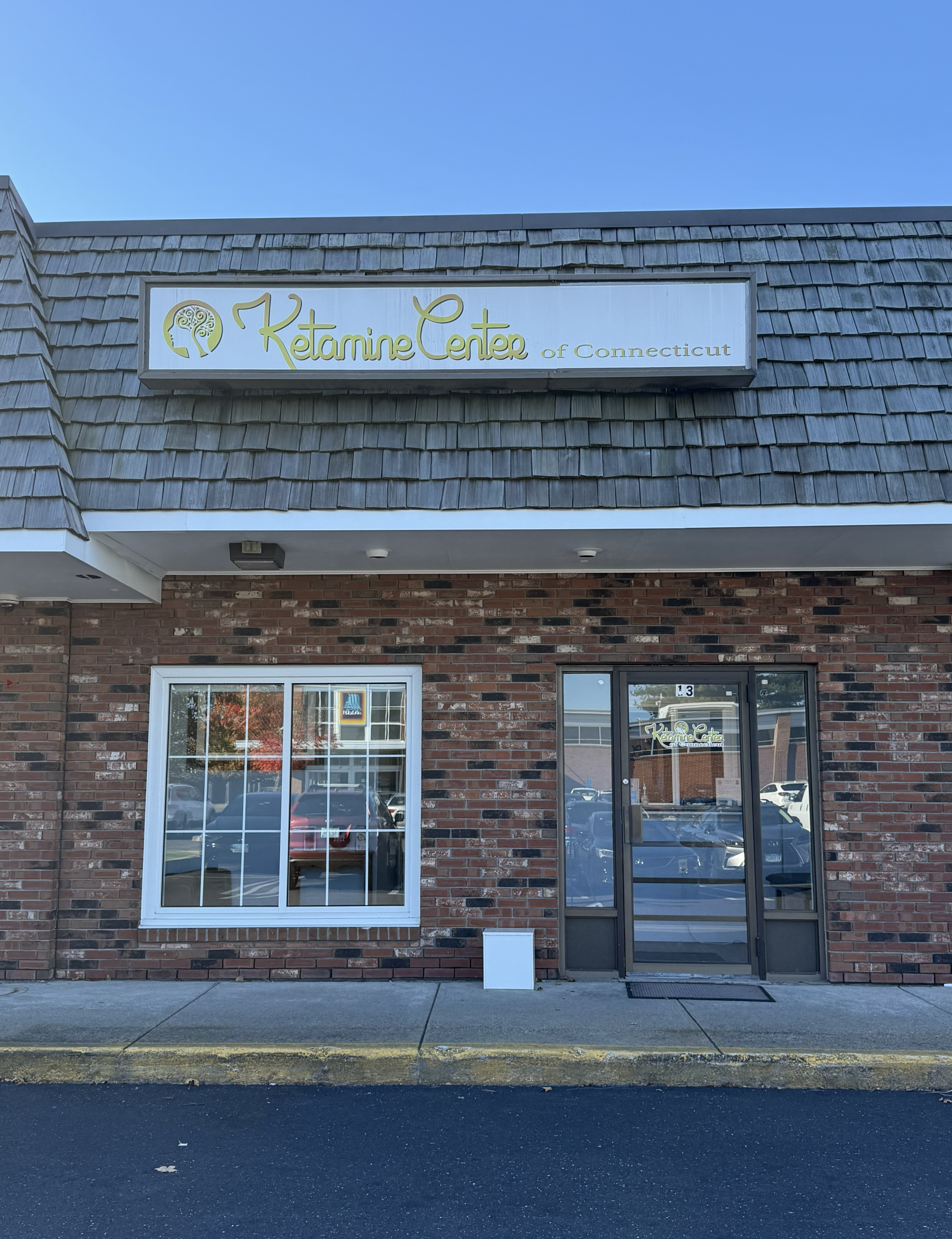
232 Boston Post Rd Suite 13, Milford, CT 06460
1720 Post Rd E Suite 222, Westport, CT 06880
Treatments are strictly supervised by a board-certified physician, Dr. Gino Ang. Ketamine is prescribed only for adults with major depressive disorder who have not responded adequately to at least two different antidepressants. All treatment sessions are conducted in a controlled clinical environment, and Ketamine is administered under the physician’s direct supervision.
Patients must follow strict protocols:
If you are experiencing symptoms of depression and want to explore ketamine treatment, please contact us to schedule a consultation at our Milford or Westport clinic. All care is personalized to ensure safety, efficacy, and adherence to clinical guidelines.

Board-Certified Anesthesiologist
This content was reviewed for medical accuracy by Dr. Gino of the Ketamine Center of CT. This information is for educational purposes and is not a substitute for professional medical advice, diagnosis, or treatment. Use of this site does not establish a doctor-patient relationship.
A board-certified anesthesiologist explains who qualifies for ketamine infusion therapy, what we screen for, and who we turn away. Milford & Westport, CT.
Pure O is not really obsessions without compulsions. A physician explains mental compulsions, why the thoughts do not mean what you fear, and what treatment works.
A board-certified anesthesiologist explains who qualifies for ketamine infusion therapy, what we screen for, and who we turn away. Milford & Westport, CT.
Struggling with severe anxiety or panic attacks? Discover how IV ketamine therapy breaks fear loops, promotes neuroplasticity, and offers rapid relief.
Struggling to tell depression and anxiety apart? Learn key differences and how IV ketamine targets shared neural pathways to relieve both conditions.
Struggling to tell depression and anxiety apart? Learn key differences and how IV ketamine targets shared neural pathways to relieve both conditions.
 Optimized by Seraphinite Accelerator