Ketamine and Alcohol: Why 24 Hours Matters
Why no alcohol for 24 hours before a ketamine infusion, what happens if you drank last night, and why daily drinkers should never stop on their own first.
Written by Dr. Gino Ang, MD, Board-Certified Anesthesiologist | Medically reviewed by Dr. Gino Ang, MD | Est. reading time: 9 minutes
People almost never ask me this one in the consultation. They ask it in the parking lot, or on the phone the night before, or in a slightly lowered voice while the IV is being set up. Usually some version of: I had a glass of wine last night, is that going to be a problem.
It is a reasonable question and it deserves a reasonable answer rather than a lecture. So here is what the rule is, why it exists, and what actually happens if you tell us the truth.
No alcohol for at least 24 hours before your infusion. None on the day of treatment. And I would not drink the evening after a session either.
That is the whole rule. The rest of this article is why, because in my experience people follow a rule much better when they understand what it is protecting them from.
This is the main one, and it is not a minor interaction. Professional drug interaction references classify alcohol with ketamine as a major interaction, with the combination capable of causing profound sedation and respiratory depression.
Ketamine is unusual among anesthetics in that it tends to preserve breathing and airway reflexes at the doses we use, which is a large part of why it is safe to give in an office rather than an operating room. Alcohol erodes exactly that margin. Add enough of a second CNS depressant and the thing that makes the treatment safe is the thing you have undermined.
At the sub-anesthetic doses used for mood disorders, with a glass of wine the night before, we are not talking about a likely catastrophe. We are talking about giving away safety margin for no benefit. As an anesthesiologist, margin is the thing I am least willing to trade.
Ketamine transiently raises heart rate and blood pressure during the infusion. That is expected and it is why we take a reading before every single session.
Alcohol affects cardiovascular readings too, and in the hours after drinking it can push heart rate up and blood pressure in unpredictable directions. If your numbers come in high on the day, we may postpone treatment. That is a wasted appointment and a delayed series over something that was avoidable.
Some people get mild nausea during an infusion. It is usually brief and manageable, and we can give anti-nausea medication beforehand.
Alcohol in the preceding day makes nausea meaningfully more likely. It also matters because vomiting while sedated is the specific scenario the six-hour fasting rule exists to prevent. We do not stack two risks for the same complication when one of them is entirely optional.
This one is less dramatic and more consequential over a full series.
We are watching how you respond to each infusion so we can adjust. If you drank the night before session three, felt flat afterwards and we recorded that as a poor response, we have just made a dosing decision based on bad information. Across a six-infusion series, that compounds.
The pre-infusion rule is firm for safety reasons. The post-infusion advice is about getting your money’s worth.
Ketamine’s effects on reflexes, coordination and perception persist for the rest of the treatment day, which is why you cannot drive and need someone to take you home. Adding alcohol to that is the obvious thing not to do.
Beyond the same day, there is a less obvious argument. The most plausible explanation for how ketamine helps is that it opens a period of increased neuroplasticity, a window in which the brain is more able to form new connections. Alcohol is a depressant that disrupts sleep architecture, and sleep is when a good deal of that consolidation is thought to happen. I cannot give you a trial that measured exactly this, so treat it as reasoning rather than proof. But if you have gone to the trouble of a full infusion series, undercutting the window with alcohol is a strange way to spend it.
Everything above assumes occasional social drinking. If you drink most days, the conversation is different and I want to be careful here.
Two things are true at once.
First, regular heavy alcohol use changes the same NMDA receptor system that ketamine acts on. That can alter how you respond to treatment, and it is genuinely relevant clinical information rather than a moral issue.
Second, and more urgently: if you drink daily or heavily, do not simply stop on your own to prepare for an infusion. Abrupt cessation in someone who is physically dependent can cause serious withdrawal, including seizures, and it can be dangerous. That is a medical situation that needs a doctor supervising it, not willpower and a calendar. Tell us, and tell your primary care physician or psychiatrist, and let it be managed properly.
What I want you to take from this section. Telling us you drink daily does not get you blacklisted. Not telling us, and then quietly stopping two days before your first infusion, is the version that could actually hurt you. I would much rather delay a series by three weeks and do it safely.
One standard drink more than 24 hours before your session is, realistically, unlikely to cause a problem. Tell us anyway and let us check your vitals with that information in hand rather than without it.
What matters more than the count is honesty about the timing. Three drinks eighteen hours ago is a different clinical picture from one drink thirty hours ago, and only one of us in the room knows which happened.
Sometimes, and it depends entirely on what we find. If you disclose a drink the previous evening and your blood pressure and heart rate are fine, we usually proceed. If you arrive having drunk that morning, we will not treat you that day, and I would say the same thing to a family member.
Rescheduling an infusion is an inconvenience. The alternative is worse.
Same 24-hour rule, same reasoning. Recreational substances interact with ketamine unpredictably and most of them affect either sedation depth or cardiovascular readings. Give us the full list at the consultation, including anything occasional. Nobody here is interested in judging it, and it is part of what we screen for before treating anyone.
You may have come across studies looking at ketamine as a possible treatment for alcohol use disorder. That research exists and some of it is interesting.
It is not what is happening at our clinic, and it is a separate question from whether you should drink around a mood-disorder infusion. If alcohol itself is the thing you are worried about, that deserves a proper conversation with your own physician or an addiction specialist rather than an inference drawn from a treatment aimed at something else. I would rather say that plainly than let the two blur together on a clinic website.
Most of what we ask of patients before an infusion is about protecting a margin of safety that you will probably never see being used.
Twenty-four hours without alcohol is a small ask in a treatment that already involves fasting, arranging a driver, and clearing an afternoon. It removes a real interaction, keeps your vitals readable, cuts the nausea risk, and lets us judge your actual response rather than a response muddied by something else.
And if the honest answer is that a day without a drink is harder than it sounds, that is worth saying out loud to someone. Not because anyone here will think less of you, but because it may be the more important thing to treat, and because stopping safely is something that needs medical help rather than resolve.
At least 24 hours, and nothing on the day of treatment. Alcohol and ketamine are both central nervous system depressants and the combination is classified as a major interaction, with risks including excessive sedation and respiratory depression. Alcohol also raises the chance of nausea and makes your cardiovascular readings less predictable.
Not on the treatment day. Ketamine affects coordination, reflexes and perception for the remainder of that day, which is also why you cannot drive. Beyond the same day, I would still be sparing with it, since alcohol disrupts sleep and sleep appears to matter for consolidating the treatment’s effects.
Tell us. One standard drink more than 24 hours before your session is unlikely to be a problem on its own, and we will check your blood pressure and heart rate with that information rather than without it. The disclosure is what matters, not the arithmetic.
Not automatically. It depends on how much, how recently, and what your vitals show on the day. Drinking the previous evening with normal readings usually means we proceed. Drinking the morning of treatment means we will not treat you that day.
Do not stop abruptly on your own. Abrupt cessation in someone who is physically dependent can cause dangerous withdrawal, including seizures, and it needs medical supervision. Tell us and tell your own doctor, and let it be planned properly. Delaying treatment to do this safely is the right trade.
Regular heavy drinking acts on the same NMDA receptor system that ketamine targets, which can affect your response. Occasional drinking close to a session mainly interferes with our ability to read how you responded, which then affects the dosing decisions we make for the rest of your series.
The same 24-hour rule applies, for the same reasons. Bring a complete list to your consultation, including anything you take occasionally.
If it were only a label, none of this would matter. It is not only a label.
Standard trauma-focused therapies, cognitive processing therapy, prolonged exposure, and EMDR among them, are built to process a traumatic memory. They work, and they are the right starting point for most people.
When the disturbances in self-organization are present, going straight at the memory often does not hold. Someone whose emotional regulation is already at its limit can be destabilized by exposure work before it has a chance to help. That is why many clinicians working with complex presentations use a phased approach: build emotional regulation and stability first, process the trauma second, rebuild connection and life outside of treatment third.
Treatment is also generally longer. That is not a failure on anybody’s part. Symptoms that have been in place since childhood do not resolve on the timeline of a twelve-session protocol, and being told otherwise sets people up to feel like they failed the treatment.
External sources are linked for verification. Interpretation of this material is the author’s own and does not imply endorsement by the publishers.
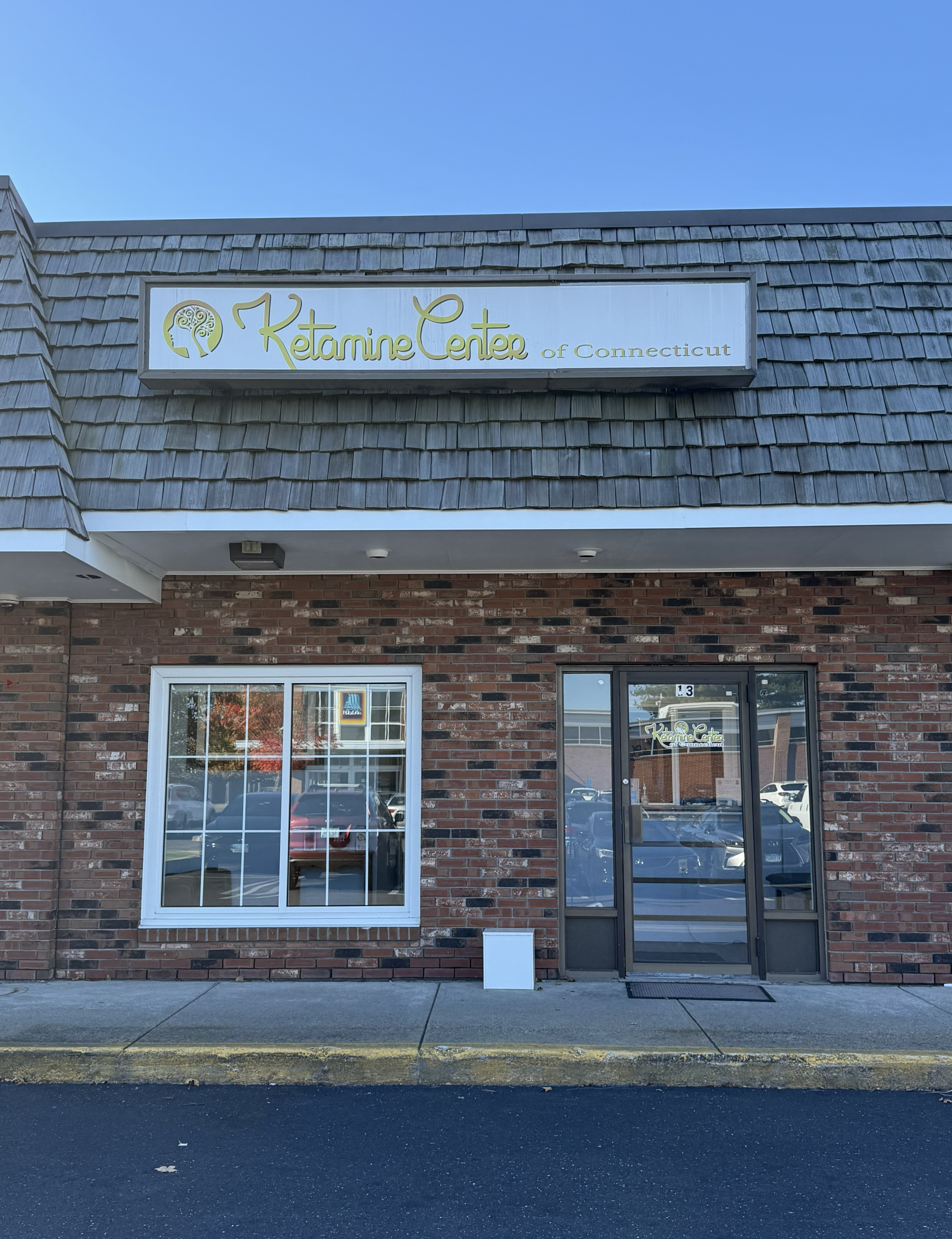
232 Boston Post Rd Suite 13, Milford, CT 06460
1720 Post Rd E Suite 222, Westport, CT 06880
Treatments are strictly supervised by a board-certified physician, Dr. Gino Ang. Ketamine is prescribed only for adults with major depressive disorder who have not responded adequately to at least two different antidepressants. All treatment sessions are conducted in a controlled clinical environment, and Ketamine is administered under the physician’s direct supervision.
Patients must follow strict protocols:
If you are experiencing symptoms of depression and want to explore ketamine treatment, please contact us to schedule a consultation at our Milford or Westport clinic. All care is personalized to ensure safety, efficacy, and adherence to clinical guidelines.

Board-Certified Anesthesiologist
This content was reviewed for medical accuracy by Dr. Gino of the Ketamine Center of CT. This information is for educational purposes and is not a substitute for professional medical advice, diagnosis, or treatment. Use of this site does not establish a doctor-patient relationship.
Why no alcohol for 24 hours before a ketamine infusion, what happens if you drank last night, and why daily drinkers should never stop on their own first.
Complex PTSD adds three symptoms PTSD does not cover, and it is not in the DSM-5. A physician explains the difference and why it changes your treatment plan.
Pure O is not really obsessions without compulsions. A physician explains mental compulsions, why the thoughts do not mean what you fear, and what treatment works.

A board-certified anesthesiologist explains who qualifies for ketamine infusion therapy, what we screen for, and who we turn away. Milford & Westport, CT.
Struggling with severe anxiety or panic attacks? Discover how IV ketamine therapy breaks fear loops, promotes neuroplasticity, and offers rapid relief.
Struggling to tell depression and anxiety apart? Learn key differences and how IV ketamine targets shared neural pathways to relieve both conditions.