Ketamine Infusion Side Effects: What’s Normal and How Long They Last
Most ketamine infusion side effects peak within an hour and fade within two. What to expect during and after IV ketamine, and when to call us.

Plenty of people find their way to a mental health conversation by way of an emergency room. Chest pain, racing heart, the absolute certainty that this was it. Hours of tests. Then a doctor saying the words that are meant to be reassuring and almost never are: your heart is fine, this was probably anxiety.
I want to write about that honestly, because most articles on this topic make a mistake that I think is dangerous. They are written to reassure you that it is probably just anxiety. That is the wrong emphasis, and it points you away from the thing that actually goes wrong most often.
Read this part first.
If you are having chest pain right now, call 911 or go to an emergency department. Do not sit with a webpage trying to decide whether it is anxiety. That includes chest pressure, pain spreading to your arm, jaw, neck or back, shortness of breath, cold sweat, nausea, or feeling faint.
Nobody can distinguish a heart attack from a panic attack by how it feels, and that includes me. It takes an ECG and blood tests. Being sent home reassured is a far better outcome than the alternative, and emergency clinicians would much rather see you than not.
There is a reason this confusion is so common, and it is not that people are imagining things.
Anxiety and panic work through your sympathetic nervous system. Adrenaline goes up. Heart rate goes up. Blood pressure goes up. Breathing becomes faster and shallower. Blood is redistributed away from your skin and your gut.
Those are also the things your body does during a genuine cardiac event. The machinery is shared. So the sensations overlap, not by coincidence but by design.
I spend my working life watching heart rate and blood pressure in real time, because that is what an anesthesiologist does. Even with a monitor in front of me, I would not try to tell you what is happening in someone’s chest from the outside. The idea that a patient should be able to do it from the inside, while frightened, is unreasonable.
| Symptom | Why anxiety produces it |
|---|---|
| Chest pain or tightness | Chest wall muscles tense hard during panic, and hyperventilation can cause genuine chest discomfort |
| Pounding or racing heart | Adrenaline raises heart rate directly; attention to it makes it more noticeable |
| Shortness of breath, air hunger | Rapid shallow breathing feels like not getting enough air even when oxygen levels are normal |
| Tingling in hands, feet or face | Hyperventilation lowers blood carbon dioxide, which produces this reliably |
| Dizziness or lightheadedness | Same mechanism as above, from altered blood flow to the brain |
| Sweating and chills | Autonomic activation and blood redistribution away from the skin |
| Nausea or stomach pain | Blood diverted away from the digestive system |
| Feeling detached or unreal | A recognised panic symptom, often the most frightening one of all |
| A sense of impending death | Not a metaphor. It is a listed diagnostic feature of a panic attack |
Tingling fingers, numb lips, the lightheaded feeling, the sense that your hands are not quite yours. People reach for terrifying explanations for these, often a stroke.
They come from over-breathing. Breathing fast and shallow blows off carbon dioxide, and low carbon dioxide changes how nerves fire and how blood vessels in the brain behave. It is a predictable chain, and it reverses once breathing settles.
Knowing the mechanism genuinely helps some people, because the symptom becomes explainable rather than ominous.
I am including this with real reluctance, and with a condition attached: these are tendencies that clinicians weigh alongside tests, not a decision tree for you to use at home.
| More typical of a cardiac cause | More typical of panic | |
|---|---|---|
| Quality | Pressure, heaviness, squeezing | Sharp, stabbing, or a localised sore spot |
| Location | Diffuse, hard to point to | Often a small area you can point to |
| Spread | Arm, jaw, neck, back | Usually stays in the chest |
| Trigger | Brought on by exertion | Often at rest, sometimes out of sleep |
| Relief | Eases with rest | Not reliably changed by rest |
| Reproducible | No | Sometimes sore when you press on it |
| Course | Builds and persists | Peaks within minutes, then fades |
Why you cannot use that table to rule anything out. Heart attacks frequently present atypically, and that is especially true in women, in older adults and in people with diabetes. Some present with no chest pain at all. Nausea, breathlessness, jaw ache or sudden exhaustion can be the whole picture.
A symptom pattern that looks like panic does not rule out a cardiac event. Only a workup does.
Here is the part most articles on this subject leave out entirely.
Everyone worries about mistaking a heart problem for anxiety. In practice the error that costs people years of their lives is the reverse: a genuine cardiac condition labelled as anxiety and then left alone.
The clearest example is supraventricular tachycardia, an arrhythmia in which the heart suddenly beats extremely fast. It comes on abruptly, it causes palpitations, breathlessness, chest discomfort, dizziness and a wave of fear, and it stops as suddenly as it started. If you read the panic attack criteria next to a description of SVT, they are close to interchangeable.
In one single-centre study of patients eventually diagnosed with SVT, 20 of the 47 patients surveyed, around 43 percent, had initially been diagnosed with anxiety or panic attacks. Nearly 45 percent of the group reported having had symptoms for more than ten years before the arrhythmia was identified. That paper is a small survey with limitations the authors acknowledge, so treat the exact percentages as indicative rather than precise. The direction of the finding is consistent with a broader literature.
A larger review of patients with supraventricular tachyarrhythmias found that women were more likely than men to report palpitations, nausea and anxiety as part of their presentation. The authors’ recommendation is the practical takeaway: keep a high index of suspicion, perform an ECG in anyone with compatible symptoms, and specifically recognise the risk of attributing these symptoms in women to anxiety or panic rather than considering an arrhythmia.
That recommendation exists because the misattribution happens often enough to be worth warning doctors about.
SVT is the headline example, not the only one.
If you have recurring episodes like this and nobody has worked them up, the sequence I would suggest is straightforward.
Capture the episode if you can. The single most useful thing a patient has ever brought me for this kind of problem is a screenshot from a watch showing a heart rate of 190 during an episode that had been called panic for three years. One screenshot changed the entire direction of that workup.
I want to be careful about tone here, because the way this diagnosis gets delivered often leaves people feeling dismissed.
Being told your heart is fine and this is anxiety can land as being told you were making a fuss. You were not. Panic attacks produce real physiological changes and the experience of one is genuinely awful. A panic attack has specific diagnostic criteria, including chest pain and a fear of dying, precisely because those features are characteristic rather than imagined.
Anxiety and panic are also treatable, often well. Cognitive behavioural therapy for panic has a strong evidence base. The frustrating part is that many people leave the emergency department with a reassurance and no referral, which means the thing they actually have goes untreated while the thing they do not have has been thoroughly excluded.
If that happened to you, the follow-up is worth chasing yourself.
Our clinic treats anxiety, so here is the conservative version.
Ketamine is not a treatment for cardiac symptoms, and it is not a first-line treatment for anxiety or panic. The evidence base in anxiety disorders is considerably thinner than in depression. It becomes a reasonable conversation when anxiety sits alongside depression that has not responded to at least two antidepressants.
There is also a specific reason this article matters to our practice. Ketamine temporarily raises heart rate and blood pressure, so cardiovascular screening is part of what we assess before treating anyone, and we check blood pressure before every single infusion. An undiagnosed arrhythmia is exactly the sort of thing that needs to be found before treatment, not during it.
The useful summary is that both errors are real, and they are not equally likely.
Mistaking a heart attack for panic is the one everybody fears, and the answer to it is simple: if you have chest pain, go and be checked, every time, without trying to reason it out first.
Mistaking a treatable cardiac condition for anxiety is the one that quietly takes years off people’s lives, and the answer to that one is an ECG, some blood tests, and a willingness to ask what else this could be before accepting the first explanation.
If you have been living with episodes like this for a long time and nobody has ever put leads on your chest, that is the place to start. Not with a webpage, and not with a ketamine clinic.
Yes. Chest wall muscles tense during panic, and over-breathing can produce genuine chest discomfort. The pain is real even when the heart is structurally normal. That does not mean chest pain should be assumed to be anxiety, because the two cannot be told apart without testing.
You cannot, and neither can a clinician without an ECG and usually blood tests. Some patterns make one more likely, such as exertional pressure spreading to the arm or jaw pointing toward a cardiac cause, but heart attacks frequently present atypically, particularly in women, older adults and people with diabetes. If you have chest pain, seek emergency care.
From over-breathing. Rapid shallow breathing lowers blood carbon dioxide, which changes how nerves fire and how blood vessels in the brain behave. It produces tingling, numbness and lightheadedness reliably, and it reverses once breathing settles.
Yes, and it happens more than people expect. In one single-centre survey of patients eventually diagnosed with supraventricular tachycardia, roughly 43 percent had first been diagnosed with anxiety or panic attacks, and nearly 45 percent had been symptomatic for over ten years. Reviews of arrhythmia patients specifically warn clinicians about attributing these symptoms in women to anxiety without considering an arrhythmia.
An ECG is the usual starting point. Because an ECG taken between episodes can be normal even when an arrhythmia exists, ask whether a Holter or longer-term event monitor is appropriate if your episodes are intermittent. Thyroid function and a blood count are also worth discussing, since both can imitate anxiety. Your own physician decides what is indicated for you.
Ask directly what else could cause this and whether it has been excluded, and ask specifically about capturing an episode on a monitor rather than only testing between them. Keeping a log with times, duration and any heart rate readings from a smartwatch gives that conversation something concrete to work with.
Ketamine is not a treatment for cardiac symptoms and is not a first-line treatment for anxiety or panic. The evidence in anxiety disorders is thinner than in depression. It becomes a reasonable discussion only when anxiety accompanies depression that has not responded to standard treatment, and cardiovascular screening is required before any infusion.Ketamine is not a treatment for cardiac symptoms and is not a first-line treatment for anxiety or panic. The evidence in anxiety disorders is thinner than in depression. It becomes a reasonable discussion only when anxiety accompanies depression that has not responded to standard treatment, and cardiovascular screening is required before any infusion.
Because ketamine is a potent anesthetic that temporarily affects your reflexes, motor coordination, and visual perception, these rules are not optional. Our full preparation and recovery guide covers the rest.
External sources are linked for verification. Interpretation of this material is the author’s own and does not imply endorsement by the publishers or their institutions.

232 Boston Post Rd Suite 13, Milford, CT 06460
1720 Post Rd E Suite 222, Westport, CT 06880
Treatments are strictly supervised by a board-certified physician, Dr. Gino Ang. Ketamine is prescribed only for adults with major depressive disorder who have not responded adequately to at least two different antidepressants. All treatment sessions are conducted in a controlled clinical environment, and Ketamine is administered under the physician’s direct supervision.
Patients must follow strict protocols:
If you are experiencing symptoms of depression and want to explore ketamine treatment, please contact us to schedule a consultation at our Milford or Westport clinic. All care is personalized to ensure safety, efficacy, and adherence to clinical guidelines.

Board-Certified Anesthesiologist
This content was reviewed for medical accuracy by Dr. Gino of the Ketamine Center of CT. This information is for educational purposes and is not a substitute for professional medical advice, diagnosis, or treatment. Use of this site does not establish a doctor-patient relationship.
Most ketamine infusion side effects peak within an hour and fade within two. What to expect during and after IV ketamine, and when to call us.
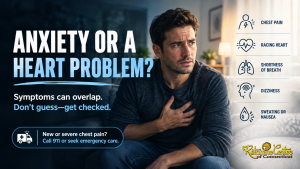
Why anxiety and cardiac symptoms feel identical, what each tends to look like, and the mistake that runs the other way: heart conditions misdiagnosed as anxiety.
One of these terms is in the DSM-5-TR and one is not. How to tell the difference, why the wording changes what gets treated, and what actually works for panic.

Why the benefits of a ketamine infusion series can fade, and how integration therapy helps the changes last. From Dr. Gino Ang, MD.
Why no alcohol for 24 hours before a ketamine infusion, what happens if you drank last night, and why daily drinkers should never stop on their own first.
Complex PTSD adds three symptoms PTSD does not cover, and it is not in the DSM-5. A physician explains the difference and why it changes your treatment plan.